
The Biblical Jealousy Antidote
Sam's Credit Card Guides
Not sure which card to get next? We break down the best options for cash back, travel, and credit building so you can choose with confidence.
We may earn a small commission from links at no extra cost to you. Read more.
Op-Ed By M.L.:
In Exodus 20 we read of the only ever recorded mass revelation of G-D to a nation. G-D speaks to all of the Israelites and gives them the 10 commandments. The Bible has 613 commandments throughout, but there’s a clear significance to these 10.
The Question of Precision
The 10th commandment is
“Do not covet your neighbors house. Do not covet your neighbor’s wife, his slave, his maid, his ox, his donkey, or anything else that belongs to your neighbor”.
The Bible is always so precise in wording, yet it chooses here to use such a superfluous language, rather than just telling us do not covet what belongs to your neighbor, or even better do not covet. The examples are pretty self explanatory, the reader can use his imagination of examples of items not to covet. In the Bible’s days the examples would probably sound close to the Bible’s examples, slave, maid, or ox. Today one would say do not covet your friend’s car, girlfriend, or degree. The point is, these examples are self explanatory.
So why does the Bible, the ultimate book of precision, feel the need to give us all of these examples? Furthermore, after all the examples, why the need to repeat “and anything else that belongs to your neighbor”?
The Difficulty of Controlling Emotion
Jealousy is a really difficult feeling to avoid. Actions are always easier to control than feelings. The Bible expecting us not to steal is obviously realistic. I can control myself not to steal.
Feelings are harder to control, but sometimes they are realistic to expect. The Bible commands me to love my fellow and love G-D, these are emotions, but there are realistic ways to create emotions, through thinking about the positive qualities of my friend and G-D that will cause me to like and even love him. So again that’s a tough but still realistic expectation of the Bible.
However, jealousy is really tough to control. When everything is going wrong for me, and all seems to be going right with my friend, how can I not be jealous. My job’s not working out, I’m fighting with everyone, I’m barely paying the bills. Then there’s my friend who has the dream job, his family gets along so well, and he seems to have everything, of course I want his life.
The Biblical Guide to Contentment
The Bible tells us don’t be jealous. But of course it gives us a guide, how can I attain the seemingly impossible non-jealousy and contentment. The answer lies within the words the Bible repeats “and anything else that belongs to him”.
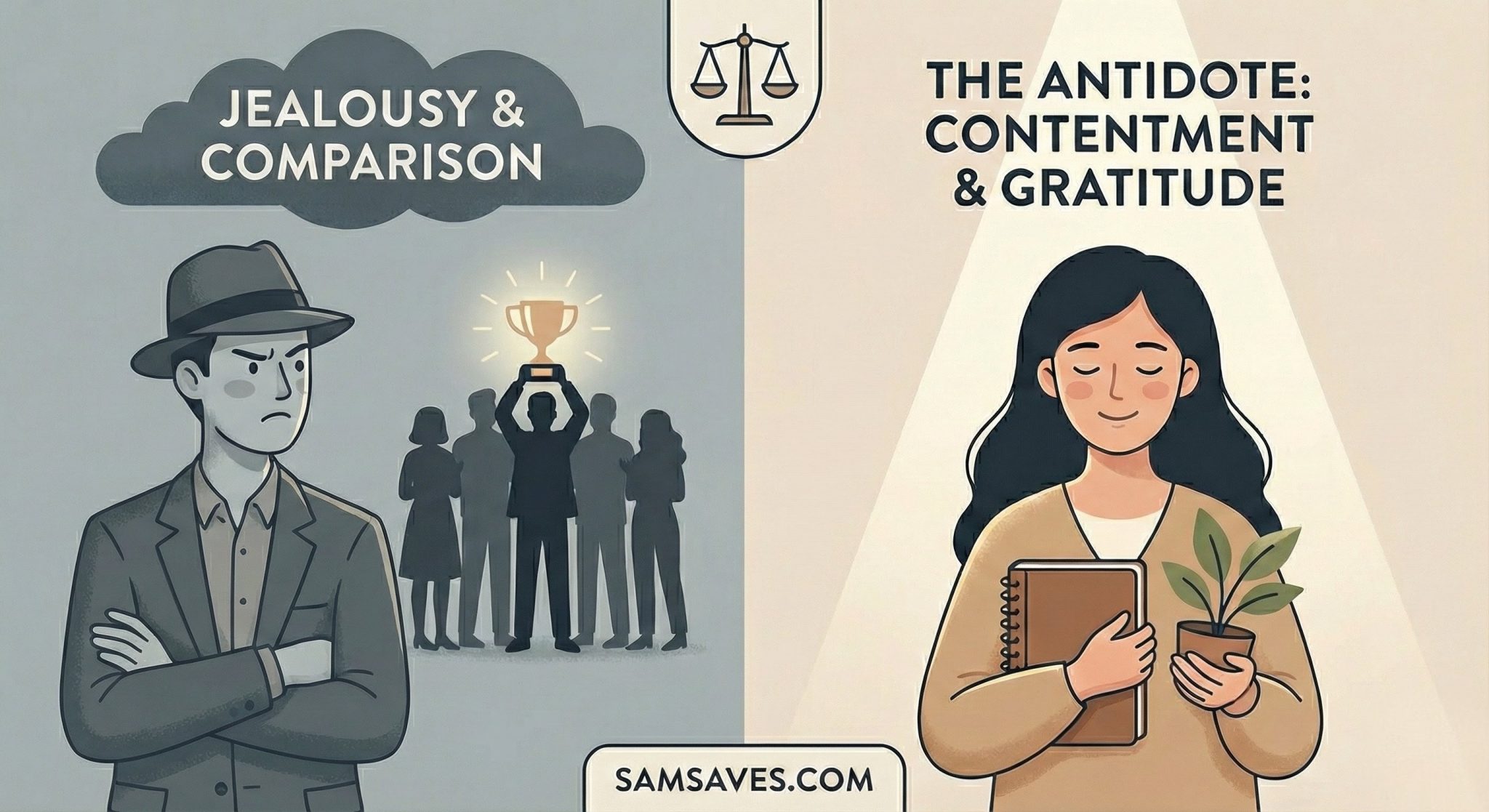
One must realize, I only see the whole picture of my own life. In my life I know what goes right and what goes wrong. My friend will usually only tell me what goes right, so I actually don’t even know what’s going wrong in his life. They say the best marriages are the ones you don’t know. Jealousy assumes I want his life, but I only see the highlight reel, not the full story. If I knew the full picture, not necessarily would I want his life. In fact, I probably wouldn’t want it.
Conclusion: The Full Comparison
That’s what the Bible is telling us, don’t be jealous of his wife, his slave, his donkey. But how can I reach this? Zoom out and realize I don’t want “anything else that belongs to him”.
It’s not good to compare ourselves to others, but if we are, it’s only fair to do a full comparison, and often when we do that, we will indeed realize I’m lucky to have what I have, and I’m grateful to be in the situation I’m in. The Torah is not telling me to stop wanting. It’s telling me to stop wanting a life I don’t actually understand.